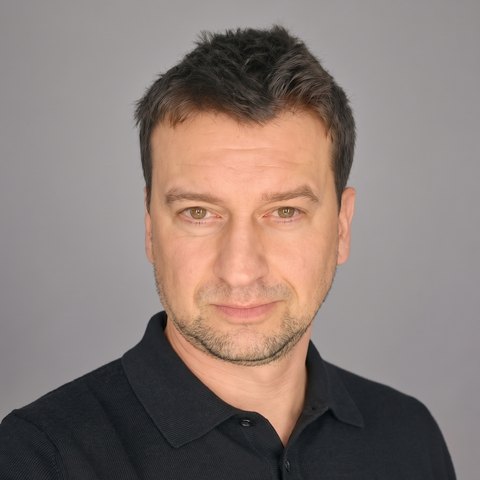
Viktor Pashaiev
Viktor Pashaiev

Hi, and welcome!

I'm glad you found your way here. This is my small personal corner of the internet, a quiet place where I can tell you a little about myself.

My name is Viktor. Here I've written down a few stories about myself: what I was like as a kid, the things I loved, the people I met along the way, and how a soldering iron and an old Commodore 64 slowly turned into a life with Linux. To be honest, I'm not quite sure why I'm writing this or who might find it useful. I just wanted to leave my story somewhere, and this felt like the right place :)

Childhood

Growing up

I grew up in Ukraine. My parents worked a lot, often far from home, to take care of us. At home, our language, books and culture were a natural part of everyday life. Not something you learn by Friday for a test, but something you live with. I still love literature because of that.

At school I was everywhere at once, sometimes a little too much. First a photography club, where I even won a couple of city competitions. Then, through the same teacher, a radio electronics club at another school, and I got so into it that I almost forgot about the camera. We soldered circuits, etched boards and built power supplies from schematics in old technical magazines.

One day we found a broken Commodore 64 there and fixed it. That's where I wrote my first lines of code, in BASIC. The computer belonged to everyone, like an old black-and-white TV in a common room, and nobody ever argued about it. We were all just happy that it worked.

My favourite subject was physics, and it still is. Later I fell in love with history too, reading different sources on my own and comparing them. It taught me that there are always two sides to every story. And in between all that there was karate, tennis, and later table tennis, which stayed with me.

1997

FidoNet

In 1997 a Pentium II and a US Robotics modem appeared at home. There was almost no internet yet, but FidoNet was very much alive. I set up my own BBS right at home, became a FidoNet node and proudly called myself a sysop.

Through it I found a whole circle of friends, and every week we met in person at our "sysopki", the weekly sysop meetups. Some of the best evenings of those years were spent there, talking about modems, nodes and everything else in the world.

University

Student years

After the soldering iron, the Commodore and the BBS, there was never really another option. I studied Automation and Control at a technical university in my home city. I thought about the best university in the capital, but my family couldn't have covered living in another city, and looking back, staying home was the right choice.

The first two years were a surprise: geodesy, geology, even drilling. Not really my thing, but I got through them, and once, years later, geodesy even came in handy. From the third year it became control theory, networks and programming, and that's where I felt at home.

I also started a rock band, where I played bass guitar at first and later switched to electric guitar. Getting musicians to agree on anything is a special kind of art, but we did play at university events. And with a few other senior students I helped first-years find their way around. Watching someone go from lost to confident turned out to be one of my favourite feelings. I think that's when I understood I like explaining things to people.

2004-2005

How Linux found me

My first job came with a task: move the company's network from Windows NT to Linux. Why Linux? Because it was free. Those were the times. A colleague and I picked Slackware, and honestly, I don't even remember why.

We did it on a live network. When my first DHCP server started handing out addresses and DNS started resolving names, it felt like magic. I changed my PuTTY font to green and felt a little like Neo from The Matrix. Simple priorities back then. That was the moment I fell in love with the terminal, and it never really went away.

When that contract ended and the next one hadn't started yet, I still came to their office at eight in the morning for a few days, just for coffee and a chat. The ladies from accounting always had an apple or a cup of tea for me. I get attached to the people I work with. Saying goodbye and starting again with new people has always been harder for me than any technology.

The years after

Night calls and good people

Then came many years of consulting, many projects and many different teams. Without really planning it, I became the person people call when something breaks. Usually at night, of course. I learned to stay calm in those moments, because usually there is already enough panic around.

I've always liked that kind of puzzle. Everything looks fine, the logs say almost nothing, and still something is clearly wrong. You go step by step, and in the end the cause is often somewhere completely different from where everyone was looking. More than once the answer to "we need new servers" was one changed line. And more than once "nobody changed anything" meant somebody did.

I made my own mistakes too. Once I ran a change in production instead of staging. Twenty very long minutes, then a rollback. Since then I check three times where I am before pressing Enter.

But what I remember most from those years are people. A colleague who was afraid to touch production, and a couple of months later was calmly debugging things on his own. A team that froze for two weeks because one engineer kept everything in his head, and the evenings I spent writing it all down so nobody would be in that spot again. Those things stay with you longer than any incident.

2026

Working in the open

For many years almost everything I did stayed behind strict NDAs and IP assignment clauses. At the end of August 2026 that chapter closed, and I could finally take part in the open source community properly, after more than twenty years with Linux.

Now I spend part of my time debugging tough hardware and system issues with users on community forums, fixing bugs in Ubuntu and Debian, and sending patches upstream - from userspace tools to kernel drivers.

It's the same work I've always done, now where everyone can see it - walking through tricky root causes step by step in public threads. After all these years of relying on open source, it feels good to give something back.

Work

What I do

Professionally, I'm an independent consultant. My area is Linux and everything built on top of it: from the kernel and drivers at the bottom, through servers, networks and storage, up to cloud platforms and Kubernetes. Over twenty years I've worked on almost every layer of that stack, and I like the low levels most, where problems get hard and interesting.

Companies usually come to me when something doesn't work and nobody can explain why, when they want an honest look at their infrastructure, or when something important needs to be built or moved without breaking anything along the way.

Kernel & systems
Kernel panics, kdump/crash, hangs, drivers, ACPI/PCIe · eBPF/perf tracing, memory and I/O tuning · kernel patches, backports, deb/rpm packaging
Enterprise Linux
RHEL, Ubuntu, Debian, SUSE · Pacemaker/Corosync, Keepalived HA, SAP HANA, PostgreSQL · ZFS, Ceph, LVM, NVMe-oF, NFS/iSCSI
Networking
BGP/OSPF, FRRouting, VXLAN, hybrid cloud networking · HAProxy, Envoy, NGINX · nftables, WireGuard, IPsec, DNS
Cloud & virtualization
AWS, GCP, OpenStack · KVM/QEMU, Proxmox, Incus/LXD · Kubernetes, OpenShift, KubeVirt
Automation & code
Terraform/OpenTofu, Ansible, GitOps, CI/CD · C, C++, Rust, Go, Python, Bash
Reliability & security
Prometheus, VictoriaMetrics, Grafana, OpenTelemetry · incident response, root-cause analysis, postmortems · SELinux, AppArmor, CIS hardening

If that sounds like something you need, the easiest way is to write to my company, ITdept.

Today

Still curious

I share my home with my cat Lila. Yes, I'm a proud cat dad :) Outside of work, not much else has changed since school, to be honest.

I still fall asleep to videos about black holes, Nikola Tesla and the Tunguska meteor. I still play table tennis, and squash too. And whenever I get the chance, I go hiking in the mountains. I've used vim my whole life and I'm not planning to stop. My home server runs Linux, of course, with my domain, my mail and a little page for Lila, probably the most important production system in the house.

And I still get the same feeling as twenty years ago when something that was broken starts working again and I finally understand why. I hope that never goes away.

Thank you for reading this far. It means a lot.

Contact

Say hello

If you'd like to say hi, ask something or talk about Linux, cats or anything else, I'm always happy to hear from you.